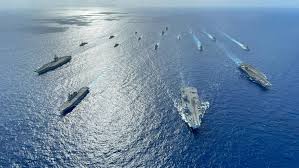
The U.S. Navy has increased its footprint in the Indo-Pacific by deploying a Carrier Strike Group (CSG) to the contested waters of the South China Sea. This move comes amid heightened tensions with China over freedom of navigation and territorial claims.
The strike group, led by the aircraft carrier USS Theodore Roosevelt (CVN-71), includes guided-missile destroyers and cruisers equipped with advanced missile defense systems. Its mission is to reassure allies, conduct joint drills, and deter potential aggression in a region where Beijing continues to expand its military outposts.
Rear Admiral James Porter, commanding the strike group, stated:
“Our presence here demonstrates America’s commitment to a free and open Indo-Pacific. We train, we sail, and we operate wherever international law allows.”
China has condemned the deployment as “provocative,” while U.S. officials maintain it is a routine patrol designed to protect international waters. Regional partners such as Japan, the Philippines, and Australia are expected to participate in joint exercises with the strike group in the coming weeks.
Analysts believe this deployment is part of a broader U.S. strategy to strengthen deterrence against China and ensure freedom of navigation in one of the world’s most critical maritime trade routes.
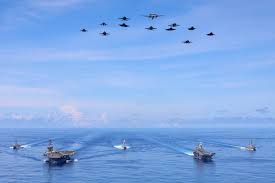
Suggested Excerpt
The U.S. Navy has deployed a carrier strike group to the South China Sea, reinforcing its Indo-Pacific strategy and sending a clear signal to China over freedom of navigation.